
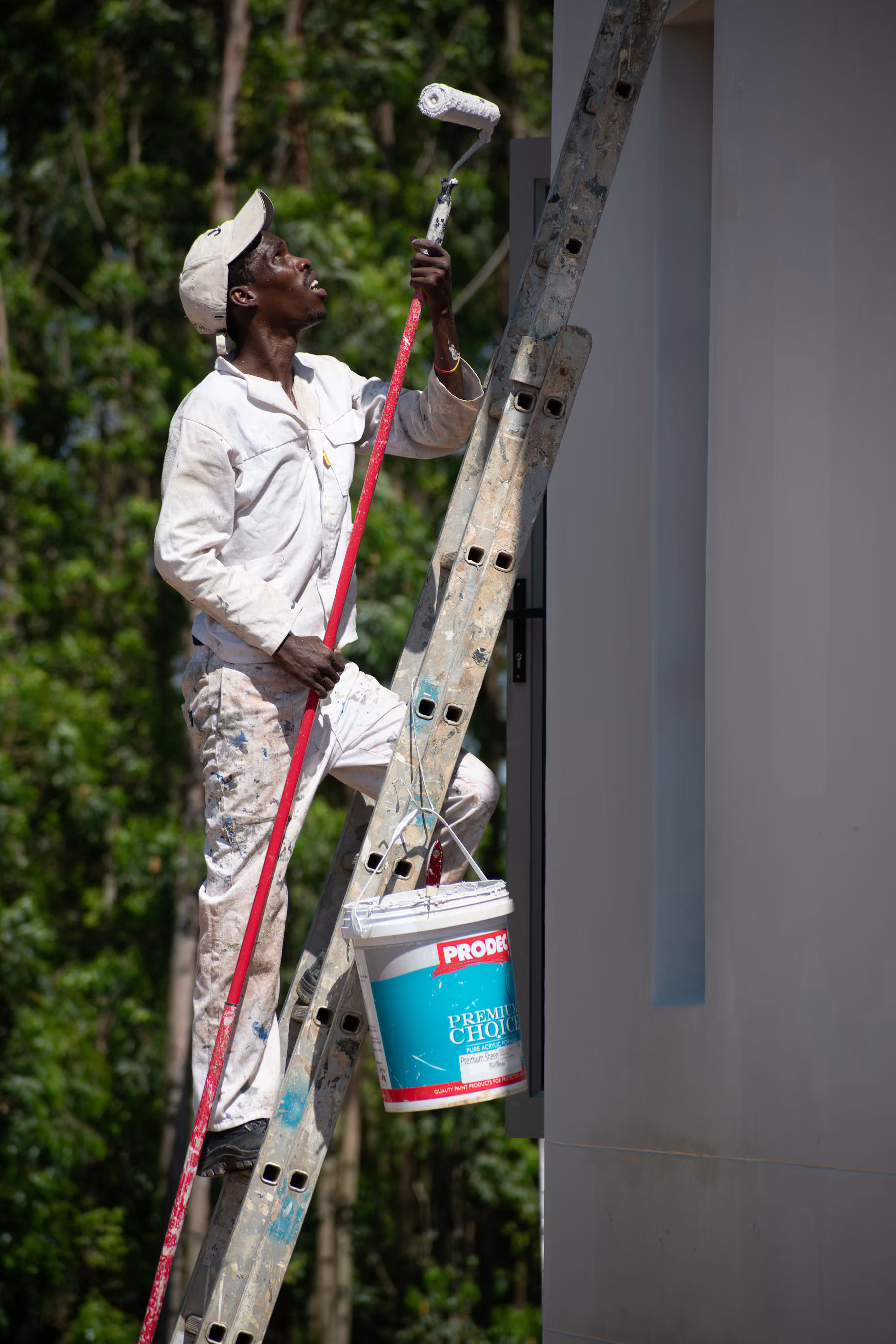
Nobody judges a wall by the first coat. It's patchy, you can see the old colour through it, and it looks unfinished. The second coat is where it comes together. Quotes are the same: the quote gets you in the door, and the follow-up wins the job.
- Most quiet quotes aren't a no. They're a not yet, and a short follow-up is often all it takes.
- Day 2, day 5, day 10: three short, friendly messages, then let it go.
- Done by hand, follow-ups are the first thing a busy owner forgets. Let them go out on their own.
The second coat
When I was selling paint jobs, I thought the quote was the hard part. Walk the house, measure, talk colours, write a fair price. Then I'd send it and wait for the phone to ring.
Often it didn't. For a long time I took that silence as a no. It usually wasn't. It was a customer who got busy, or was waiting on a second quote, or had a small question they didn't want to call about. A first coat, waiting for a second.
A follow-up is that second coat. It doesn't change the paint. It finishes the job you already did. The customers who said yes after a follow-up weren't harder to win. They just needed a sign that I was still there.
Why it isn't pushy
Most owners don't follow up because it feels pushy. Nobody wants to be the guy who won't stop calling.
But look at it from the customer's side. They asked you for a quote. They're planning to spend real money on their home. A short, friendly message from you isn't pressure. It shows you're on top of things and that you'll show up. If you follow up on a quote, they figure you'll follow through on the job too.
And if they've already picked someone else, a polite message costs you nothing. Sometimes it gets you a straight answer, which is worth having too.
Day 2, day 5, day 10
Here's the simplest system I know. Three messages, each one short, each one easy to answer.
Day 2, check it arrived: "Hi Laura, it's Davis. Just making sure the estimate came through okay. Happy to answer any questions."
Day 5, offer something useful, like an answer, a colour idea or a start date: "Hi Laura, we have an opening the week after next if you'd like to get on the schedule. Want me to hold it for you?"
Day 10, close the loop, kindly: "Hi Laura, I don't want to keep bugging you. Should I keep your estimate open, or have your plans changed?" It's the easiest of the three to answer, so it often gets the reply the first two didn't.
Then stop. Three messages is a follow-up. Seven is a nuisance. I like a text for the short ones, and email when there's a document to look at. Either way, use whatever the customer used to reach you.
"Nobody judges a wall by the first coat."Davis, on following up
Why the habit breaks
The system is simple. Doing it by hand is the hard part. On a quiet week, sure. On a busy week, with crews out and the phone ringing, day 5 comes and goes and you never notice. Funny enough, the busier you are, the more quotes you send, and the fewer of them you follow up.
Every busy owner knows this one. You come home with a head full of quotes and the best intentions, and by Thursday you can't tell who you checked in with and who you didn't.
That's not a discipline problem. It's a memory problem, and it's exactly the kind of job a computer is good at. It doesn't get tired, it doesn't get busy, and it never leaves a quote on the passenger seat.
Let it go out on its own
In our CRM, every quote sits on your pipeline board until it's won or lost. When one goes quiet, the follow-up goes out on its own, in your name. If the customer replies, you see it on the same page as the quote. If they say yes, the card moves to won and the job goes on the schedule.
You keep doing the part only you can do: the walk-through, the price, the work. The boring habit runs itself. Book a free 30-minute call and we'll show you how it looks with your own quotes.